







Some borders are easy to see. Lines on a map. Customs gates. The space between where your goods are and where your money is.
Other borders are harder to name. The waiting room of a bank that promised your transfer would arrive last week. The school fees that can’t be paid this term, and the term after, and the term after. The opportunity a child never knew was on the table because she was born somewhere people don’t pay attention to.
The Borders We Bridge
At Oneremit, we built our company around the idea that all of these are the same problem in different forms. The obstacles between people and what they’re trying to build are not infrastructure we have to accept.
Our work is cross-border payments. Businesses paying suppliers in China. Diaspora families sending money home from Toronto and London. We’ve revolutionized the ease and costs of making international transactions. Through Nexus, our education payments brand, we work specifically on tuition and school fees - the payments that decide whether a student keeps studying.
But there are other borders that we don’t work on. Borders that shape whole lives. For Children’s Day this year, we partnered with an organisation that works on those borders at an even bigger scale.
A Partnership Bridging Borders
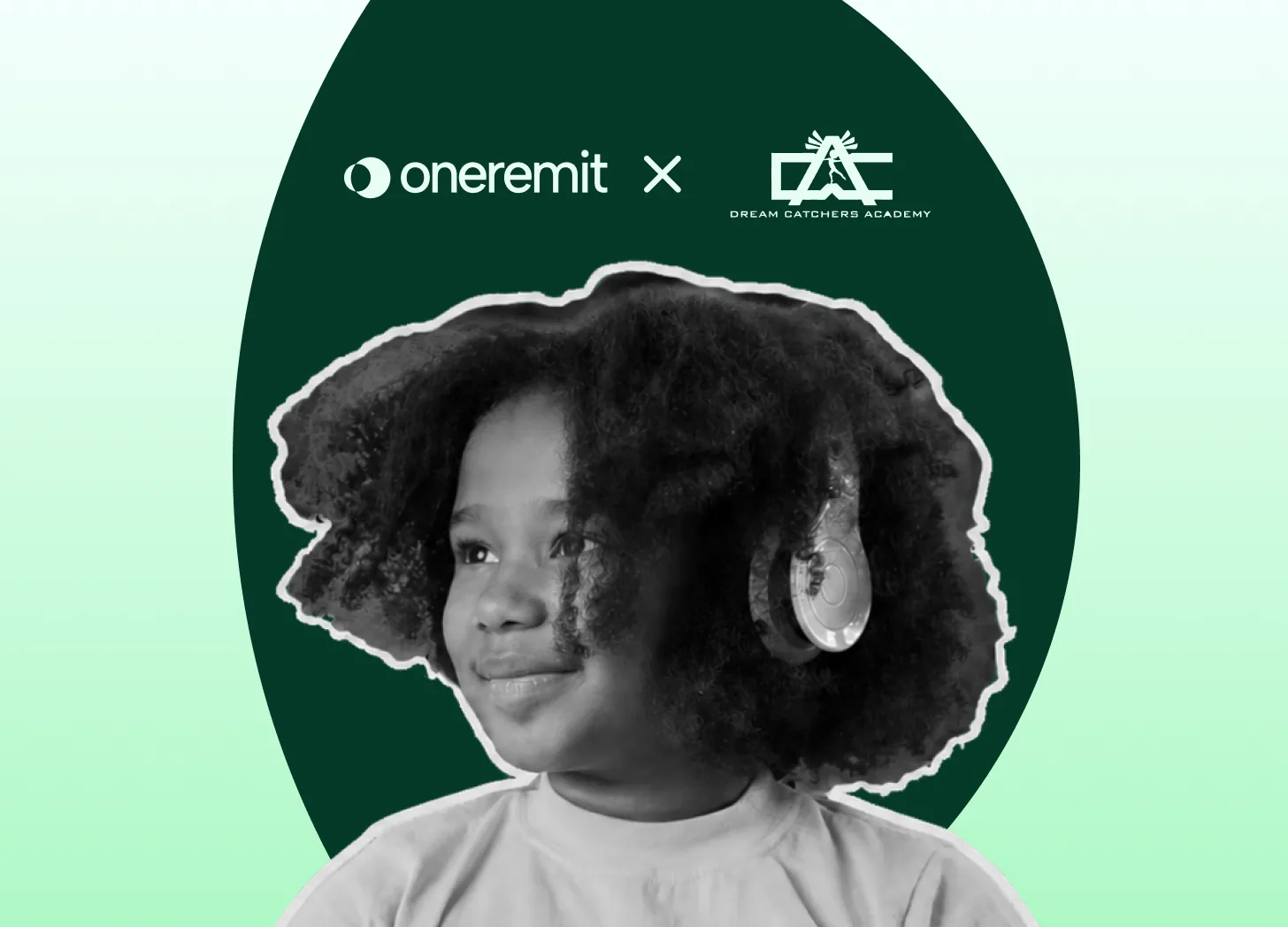
On May 27th, for Children’s Day, we partnered with Dream Catchers Academy to contribute to what they’re already doing. Based on the results, we are confident this is the beginning of a long-term relationship.
Dream Catchers Academy was founded in 2014 by Seyi Oluyole, who started by teaching dance to street children in Lagos and ended up building one of the most remarkable youth empowerment programmes on the continent. Today, DCA provides full-time shelter, education, arts training, and life skills to a roster of orphaned and underserved girls in Ikorodu.
You may have seen their dance content; nearly two million people follow it on Instagram. International artists have shared the videos. The choreography is sharp, joyful, and technically demanding. But the dance is downstream. The world sees the dance as pure entertainment, but the work behind the scenes suggests otherwise.
The work is making sure every girl in the academy is enrolled in school and showing up to class. The work is keeping the lights on in a house with young children whose every meal, every uniform, every textbook is somebody’s responsibility. The work is funding university for the girls who age out of the academy and want to keep going.
The work is also the slower thing, the harder thing: teaching girls who were told, sometimes without anyone saying it out loud, that they were extras in someone else’s story, to start writing their own.
It’s the kind of work we want to be a part of. We’ll keep building a future without borders — in payments, in education, and alongside DCA.
Join us → oneremit.co
Subscribe to our newsletter
for industry and payment insights